
Optimal Camera Settings For Wildlife Photography
AF mode: Predictive Focus
When photographing moving subjects, switch to predictive AF, which makes it easier to capture good shots. By keeping your finger half-pressed on the AF or shutter button, the lens will track the subject, adjusting focus continually to keep the subject sharp in the frame.

Exposure mode: Shutter-priority mode
A wildlife photographer’s priority is achieving a suiciently fast shutter speed. Using shutter – priority (S or Tv) gives control over shutter speed,while the camera will select the corresponding aperture. Many also favour using aperture-priority.

Metering mode: Multi-segment metering
Multi-zone metering (Canon’s Evaluative or Nikon’s Matrix) is so good that you will rarely want to use anything else. However, spot metering is useful in situations where you wish to meter for a small, specific area – like plumage.
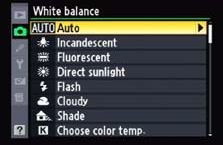
White Balance: Auto
Auto WB produces very good, accurate results in most situations. If you are shooting Raw – which we would always recommend to ensure you capture the most detail in your images – you can fine tune colour temperature during post-processing. Release mode: Continuous Many cameras are capable of shooting upwards of 5fps (frames per- second) – some are as fast as 12 fps. By holding your finger down on the shutter release button, you can capture large continuous bursts of images. This is ideal when shooting movement oraction.
ISO RATINGS: ISO 400-6400
Typically, wildlife photographers require a fast shutter speed due to subject motion or to eliminate their own movement when shooting handheld. Although you should always use the lowest practical ISO, faster ISOs allow you to capture fast movement and work in low light.
You May Want to See :
-
 SONY Alpha 7S II
-
 Basic Techniques For Wildlife Photography
-
 Pentax K-S2
-
 Capture The Movement of The Stars Across Night Sky Like A Pro
-
 Macro Photography Like A Pro
-
 The relationship between ISO & image Noise
-
 8 Common Composition Mistakes in Photography
-
 Essential Photography Tips & Tricks
-
 The Sony Alpha System
-
 The Pentax DSLR System
-
 5 Things you should know before buying a camera
-
 Canon EOS 5DS R
-
 Canon EOS 760D
-
 Canon EOS 750D
-
 Canon Unveils Superzoom G3 X
-
 Sony introduces A7R II
-
 Best Accessories You’ll Need in Wildlife Photography
-
 Sony Cyber-shot DSC RX100 IV
-
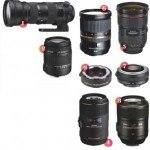 Picking the Right Glass for Wildlife Photography
-
 Leica S
-
 Quick Guide to Photographing Fungi


 Loading ...